

Search something on Google today and you often get an answer before you see a single link.
Ask ChatGPT, and it gives you an answer with a few sources at the bottom.
Those sources are the new page one.
If your article is one of them, you get the trust and the clicks. If it isn't, you're invisible. Here's how to become one of the sources AI picks.
The Quick Version
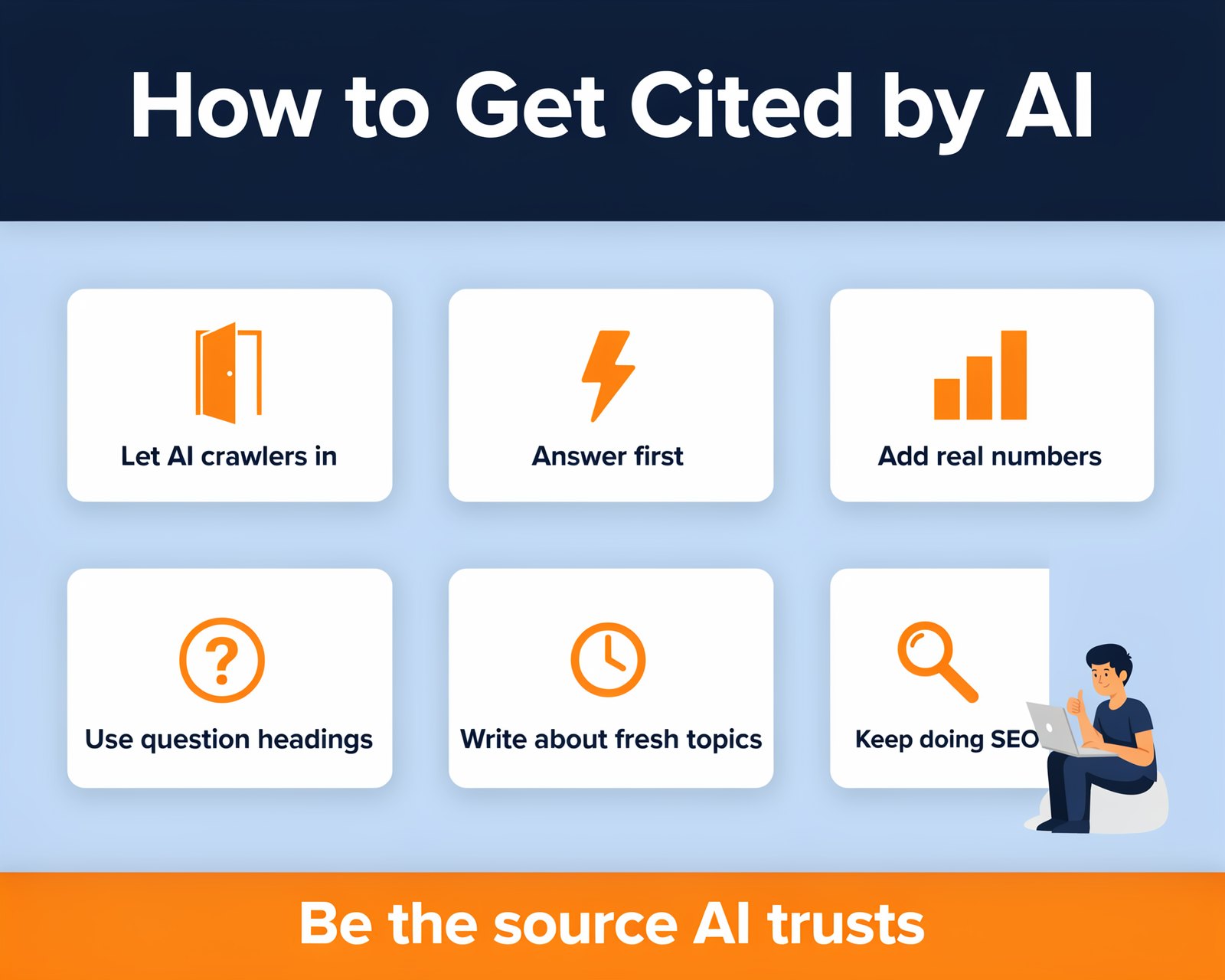
- Let the AI crawlers in. Google and ChatGPT can only quote pages they can read.
- Answer the question in the first lines. Then explain.
- Add real numbers, quotes and named sources. AI loves facts it can check.
- Use clear headings that sound like questions.
- Write about fresh topics before everyone else does.
- Keep doing good SEO. Most AI answers still come from pages that rank well.
Why AI Citations Matter Now
This isn't a small trend anymore.
Google's AI Overviews reach around 2.5 billion people a month, and AI Mode passed 1 billion users this year, according to figures shared around Google I/O in May 2026.
And ChatGPT has its own search, which people use every day for advice, product picks and how-tos.
When an AI answer shows up, fewer people click on the plain links below it. The pages that get named inside the answer get the attention.
So the goal has changed a little. It's not just ranking. It's being the source the AI trusts enough to quote.
How AI Decides What to Cite
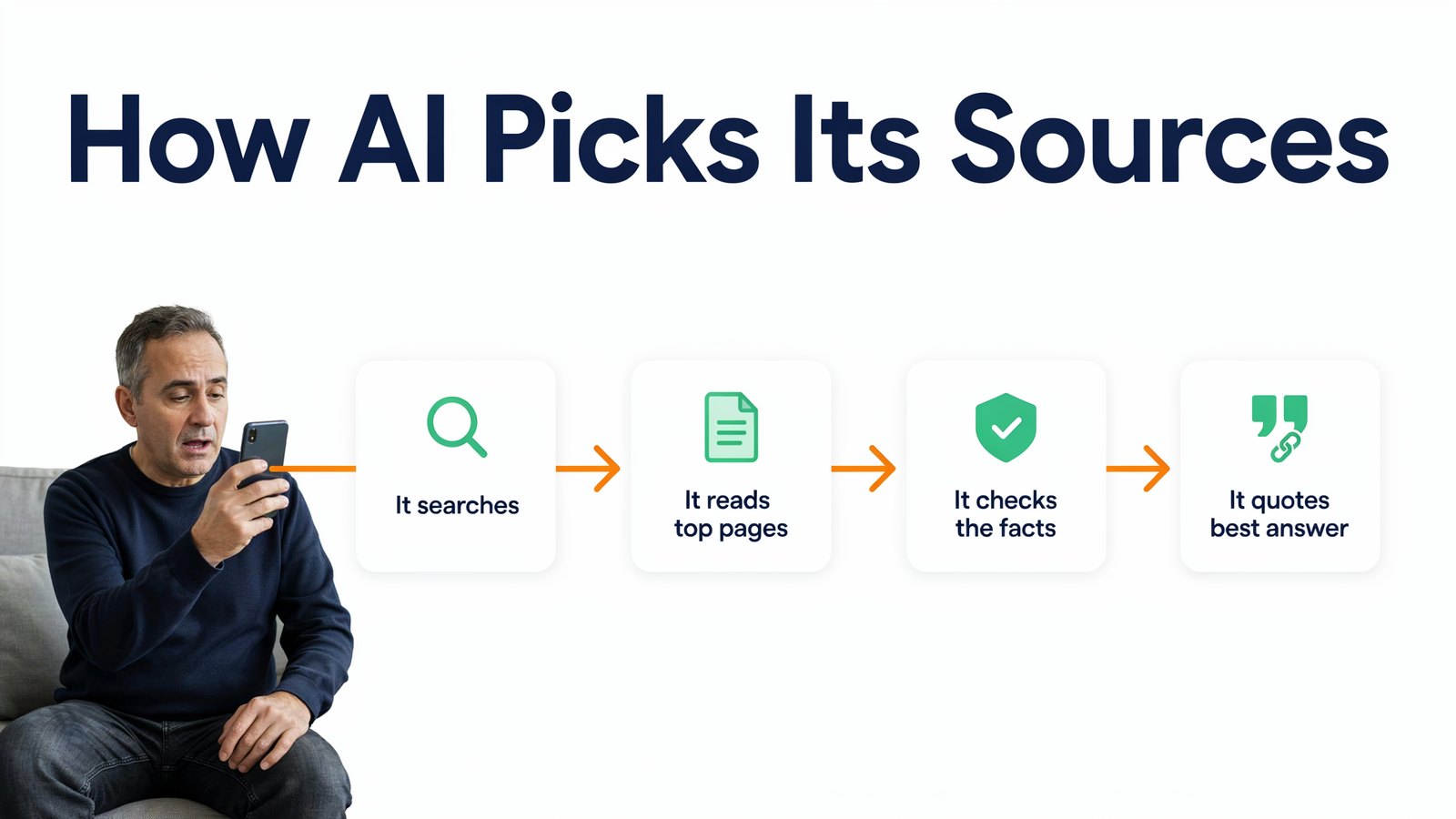
Here's the simple version of what happens.
- It searches. Google uses its own index. ChatGPT search leans on Bing and its own crawler.
- It reads the top pages. It looks for the parts that answer the question clearly.
- It checks the facts. It prefers pages with real data and sources it can trust.
- It quotes the best bits and links back to the pages it used.
Notice something?
There's no magic trick here. AI rewards the same thing a good reader rewards. Clear answers, real facts and pages that are easy to read.
8 Steps to Get Your Content Cited by AI
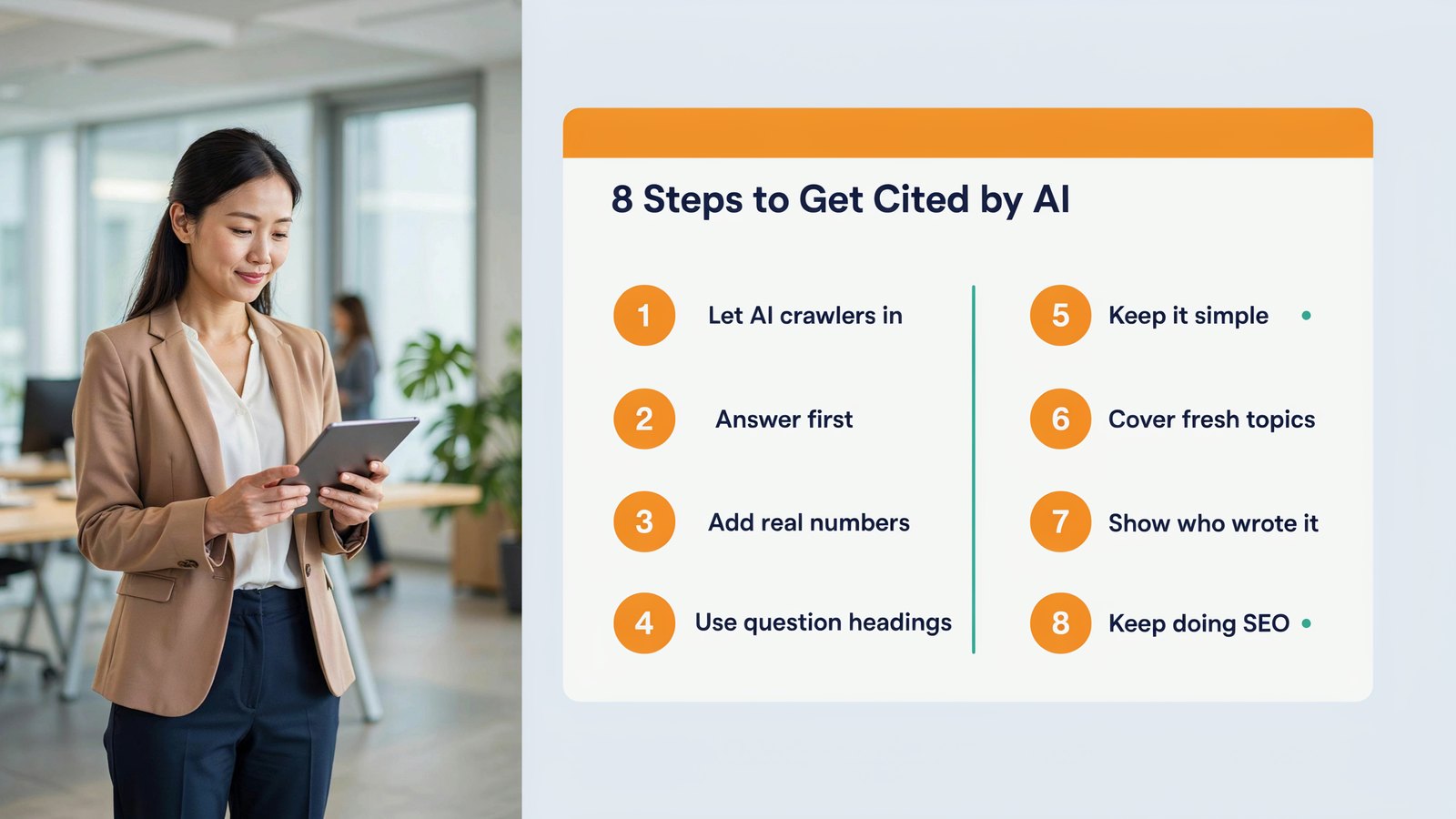
1. Let the AI crawlers in
This one is easy to miss.
OpenAI says its OAI-SearchBot decides whether your site can appear in ChatGPT search answers. If your robots.txt file blocks it, you won't be cited.
Google says the same about its own crawler. To show up in AI Overviews, your page just needs to be indexed and allowed to show a snippet in normal search.
Ask whoever runs your site to check your robots.txt file and any firewall or security plugin that blocks bots.
2. Answer the question first
Put the answer in the first one or two sentences of each section. Then explain.
AI pulls short, direct answers. If the answer is buried in paragraph six, it will quote someone else.
3. Add real numbers and name your sources
This is the big one.
Researchers from Princeton and IIT Delhi tested this in their study on Generative Engine Optimization, presented at KDD 2024. Adding statistics, quotes and citations to content raised its visibility in AI answers by up to 40%.
Stuffing in keywords, on the other hand, did almost nothing.
So say "CallRail found 28% of calls go unanswered" instead of "lots of calls go unanswered". Specific beats vague, every time.
4. Use headings that sound like questions
People ask AI full questions. "How much does a website cost?" "What is the best CRM for a small team?"
Use those questions as your headings. It makes it easy for AI to match your section to what someone asked.
5. Keep it simple and easy to scan
Short paragraphs. Bullet lists. Plain words.
A page that's easy for a person to skim is easy for AI to read too.
6. Cover topics while they are fresh
AI answers love new information, because there isn't much of it yet.
If you write about a new trend, tool or update early, you have a real chance of being one of the few sources available. Later, you're competing with hundreds of articles.
7. Show who wrote it
Add an author name and a short bio. Mention real experience. Link to your About page.
Both Google and AI tools look for signs that a real person who knows the topic wrote the page.
8. Keep doing good SEO
Don't throw away your SEO.
Studies keep finding that most AI Overview sources come from pages that already rank well in Google. Good titles, fast pages, internal links and backlinks still matter.
What an AI-Friendly Article Looks Like
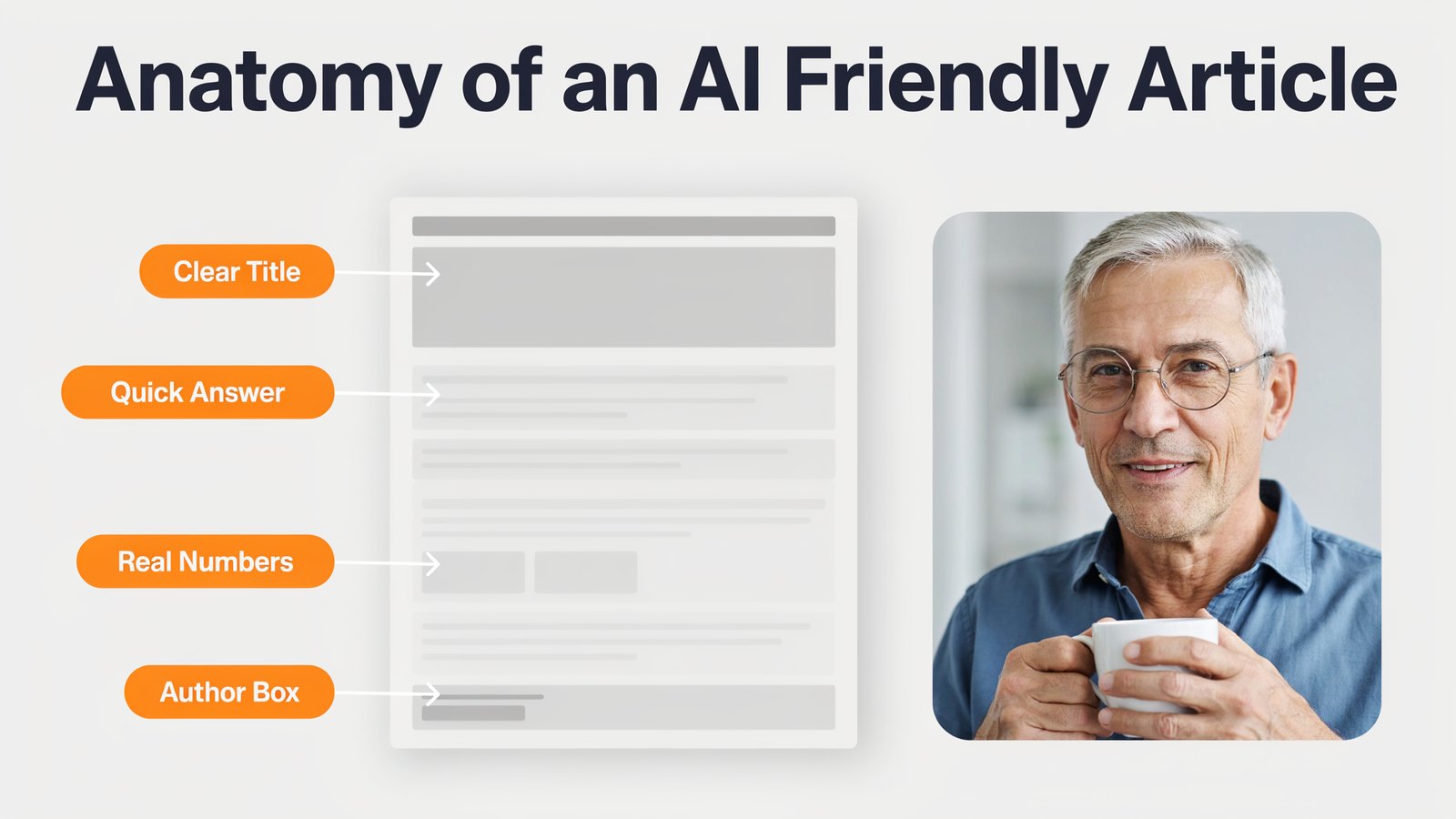
Put all of that together and a strong article usually has these parts.
- A clear title that matches what people search for.
- A quick answer right at the top.
- Question headings for each main point.
- Real numbers and named sources in every section.
- Short lists that are easy to quote.
- An FAQ section with short, direct answers.
- An author box with a real name.
The Hard Part Is Doing This Every Week
Knowing what to do is easy.
Doing it week after week is the hard part. Fresh topics, real research, clean structure, good graphics. It takes hours for each article.
And by the time you get to a trending topic, everyone else has written about it.
How Articalize Helps You Get Found in AI Search
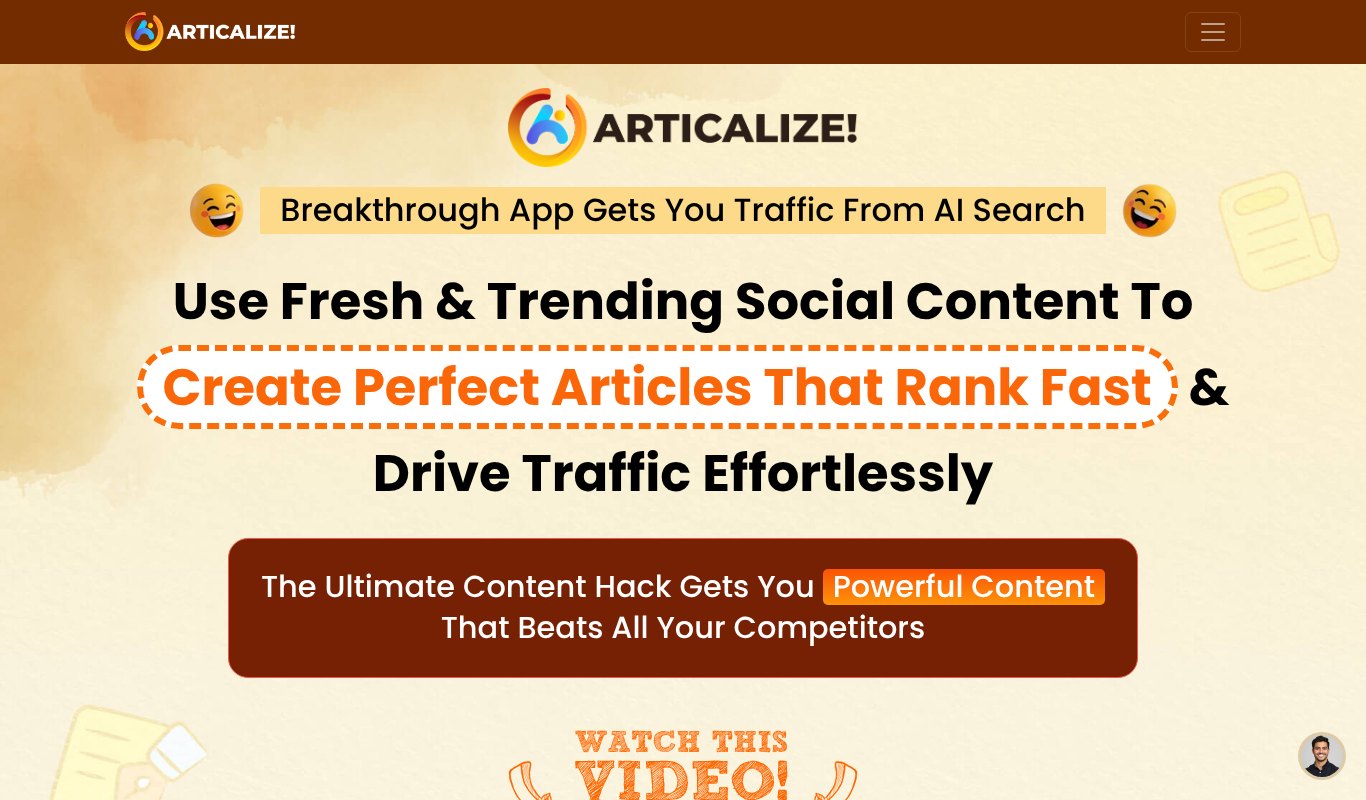
That's exactly why we built Articalize.
Articalize turns fresh, trending content into full articles in one click. The latest conversations happen on social media first, so that's where Articalize starts.
- Turn almost anything into an article, including YouTube videos, X threads, Reddit posts, Quora questions, LinkedIn and Facebook posts, Threads posts and web pages.
- Catch trends early, while there are still few articles on the topic.
- Get human-sounding writing with fresh ideas and your own style.
- Create graphics automatically, including illustrations and infographics for your post.
- Write in many languages, and turn content from one language into articles in another.
- Make product articles, comparisons and listicles for any niche.
And it won't break the bank.
Articalize costs $17 a month, or $67 for a whole year.
If you want your content to show up where people are asking questions now, try Articalize and publish your next article today.
Frequently Asked Questions
What is Generative Engine Optimization?
Generative Engine Optimization, or GEO, means making your content easy for AI tools like ChatGPT and Google AI Overviews to find, understand and quote.
Is GEO different from SEO?
They overlap a lot. Good SEO gets your page found. GEO makes sure the AI wants to quote it once it's found. You need both.
Do I need special code to appear in AI Overviews?
No. Google says there are no extra technical requirements. Your page needs to be indexed and allowed to show a snippet in regular search.
How long does it take to get cited?
It varies. A fresh article on a new topic can be cited within days. For busy topics it takes longer, just like ranking in Google.
Final Thoughts
AI search isn't replacing good content. It's rewarding it.
Answer clearly. Back it up with real facts. Make it easy to read. And get there early.
Do that consistently, and you'll start seeing your name inside the answers people read every day.